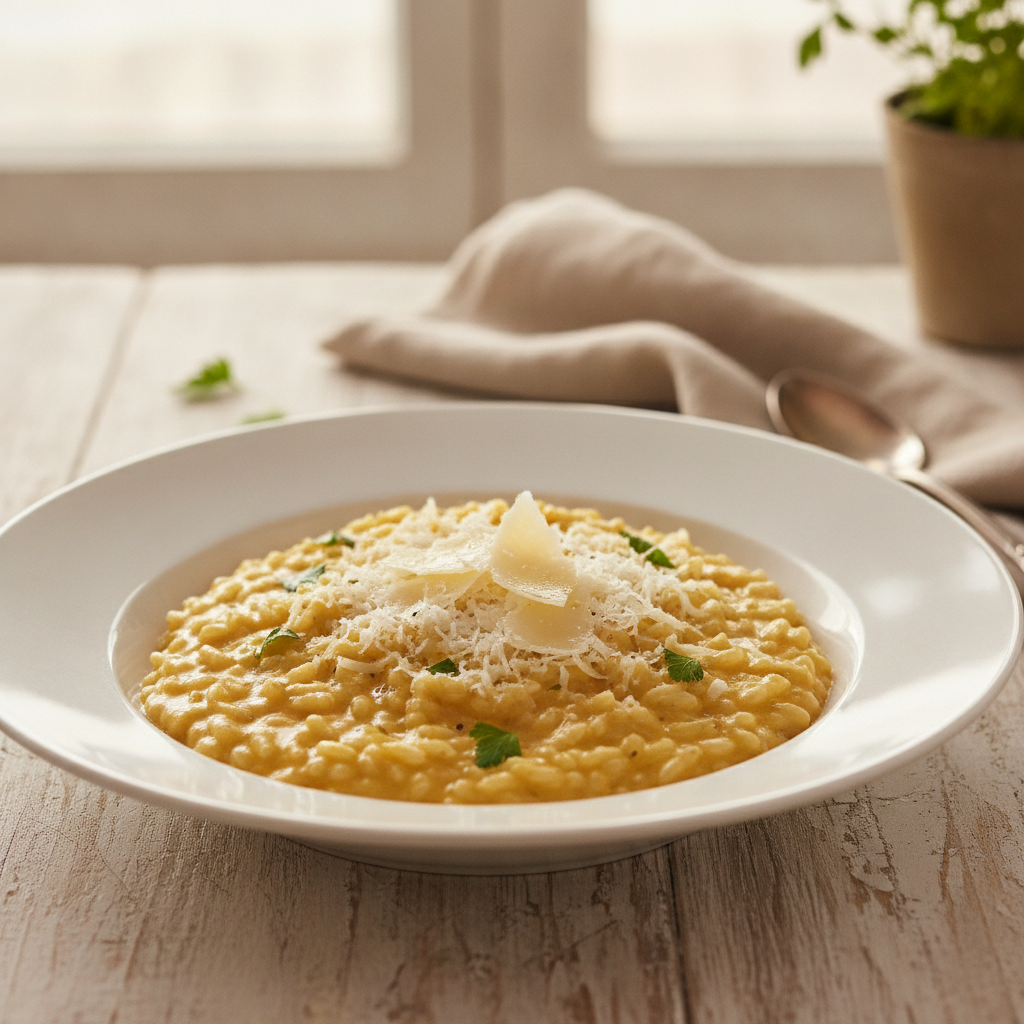
Authentic Risotto al Parmigiano Reggiano Recipe
There is nothing quite like the magic of real Italian cooking, especially when it centers around one of the world’s finest ingredients: authentic Parmigiano Reggiano. Inspired by the heartwarming moment of Nonna Pia receiving a magnificent wheel of cheese straight from Chef Michele, we are sharing a classic recipe that lets this “King of Cheeses” truly shine in your home kitchen.
Recipe Overview
Risotto al Parmigiano Reggiano is the ultimate test of simplicity and technique. With just a handful of ingredients, this classic Northern Italian dish transforms humble grains of rice into a rich, velvety masterpiece. The secret lies not in heavy cream, but in the natural starches of the rice releasing and emulsifying with cold butter and freshly grated Parmigiano Reggiano. This process, known as mantecatura, creates an incredibly creamy texture that highlights the complex, savory, and nutty notes of the cheese.
Ingredients
To make this classic dish at home, you will need:
- 1.5 cups (300g) Carnaroli or Arborio rice
- 1 cup (100g) Parmigiano Reggiano, finely grated (ideally aged 24 months)
- 1.5 liters (approx. 6 cups) high-quality chicken or vegetable stock (kept hot on the stove)
- 1/2 cup (120ml) dry white wine (such as Pinot Grigio or Sauvignon Blanc)
- 1 small shallot, very finely minced
- 2 tablespoons extra-virgin olive oil
- 3 tablespoons (45g) unsalted butter, cubed and kept ice-cold
- Salt and freshly cracked black pepper, to taste
Step-by-Step Instructions
- Warm the Stock: Pour your stock into a saucepan and bring it to a gentle simmer. Keep it warm on low heat throughout the cooking process.
- Sauté the Aromatics: In a large, heavy-bottomed pan or Dutch oven, heat the olive oil over medium-low heat. Add the minced shallot and cook gently for 3 to 4 minutes until translucent and soft, ensuring it does not brown.
- Toast the Rice (Tostatura): Turn the heat up to medium. Add the rice to the pan and stir constantly for 2 to 3 minutes. The grains should become slightly translucent at the edges and smell toasted. This step helps seal the starches so the rice holds its shape.
- Deglaze: Pour in the dry white wine. Stir continuously until the wine is fully absorbed by the rice.
- Add Stock Gradually: Ladle about 1 cup of hot stock into the rice. Stir gently and continuously. Once the liquid is almost fully absorbed, add another ladle of stock. Continue this process for about 16 to 18 minutes. The rice should be tender but still have a slight bite in the center (al dente).
- Perform the Mantecatura: Remove the pan completely from the heat. This is the most crucial step! Stir in the ice-cold cubed butter and the finely grated Parmigiano Reggiano. Stir vigorously for about a minute. This incorporates air and emulsifies the fats with the rice starches, creating a luxurious, wavy sauce (known as all’onda).
- Season and Rest: Season to taste with salt (be mindful as the cheese is already salty) and freshly cracked black pepper. Let the risotto rest in the pan for 1 to 2 minutes before serving.
Tips for Best Results
- Never Use Pre-Grated Cheese: Pre-packaged grated cheese contains anti-caking agents that prevent it from melting smoothly. For a velvety risotto, grate your Parmigiano Reggiano fresh from the wedge.
- Keep the Stock Hot: Adding cold stock to the pan will lower the temperature of the rice and disrupt the cooking process, leading to unevenly cooked grains.
- Stir Constantly but Gently: Stirring releases the amylose starch from the rice, which is what makes the risotto creamy. However, do not mash the grains.
- Cold Butter is Key: The temperature difference between the hot rice and the ice-cold butter is what helps create a perfect, stable emulsion.
Serving Suggestions
Serve the risotto immediately in warm shallow bowls. Garnish with an extra sprinkle of freshly grated Parmigiano Reggiano and a few cracks of black pepper. For an elegant twist, top with a drizzle of traditional aged balsamic vinegar of Modena or a few drops of high-quality white truffle oil.
Storage and Reheating
Risotto is best enjoyed immediately. However, if you have leftovers, store them in an airtight container in the refrigerator for up to 3 days. To reheat, place the risotto in a saucepan with a splash of water or stock over medium-low heat, stirring constantly until warmed through and creamy again. Alternatively, use leftovers to make delicious, crispy Italian Arancini (fried rice balls)!
Frequently Asked Questions
What is the difference between Arborio and Carnaroli rice?
While both are excellent superfino Italian rices, Carnaroli has a higher starch content and a firmer grain. It is often preferred by professional chefs because it is more forgiving to cook and yields an exceptionally creamy texture while maintaining its structure.
Can I make this recipe dairy-free?
Because Parmigiano Reggiano and butter are the core flavor components of this dish, we do not recommend substituting them. If you need a dairy-free option, look for specialty vegan alternatives, though the final flavor and texture profile will differ significantly from the classic Italian version.
How do I know when the risotto is perfectly cooked?
Perform the “wave” test: if you gently shake the pan back and forth, the risotto should move in waves (all’onda). It should not be a stiff mound on the plate, nor should it be soupy. When you bite into a grain of rice, it should be tender with just a tiny bit of firmness at its core.
Source Media
Source: Happy Halloween! 🎃 No tricks here! Just a huge Parmigiano Reggiano Treat!