Golden Risotto alla Milanese: A Classic Saffron Recipe
There is nothing quite like the warmth of a traditional Italian kitchen, especially when the aroma of toasted rice and rich saffron fills the air. Inspired by the comforting, time-honored cooking of classic Italian grandmothers, this recipe for Risotto alla Milanese brings that authentic rustic elegance straight to your dining table. With its iconic golden hue and luxurious, velvety texture, it is a dish that feels like a celebratory feast yet relies on simple, high-quality ingredients.
Recipe Overview
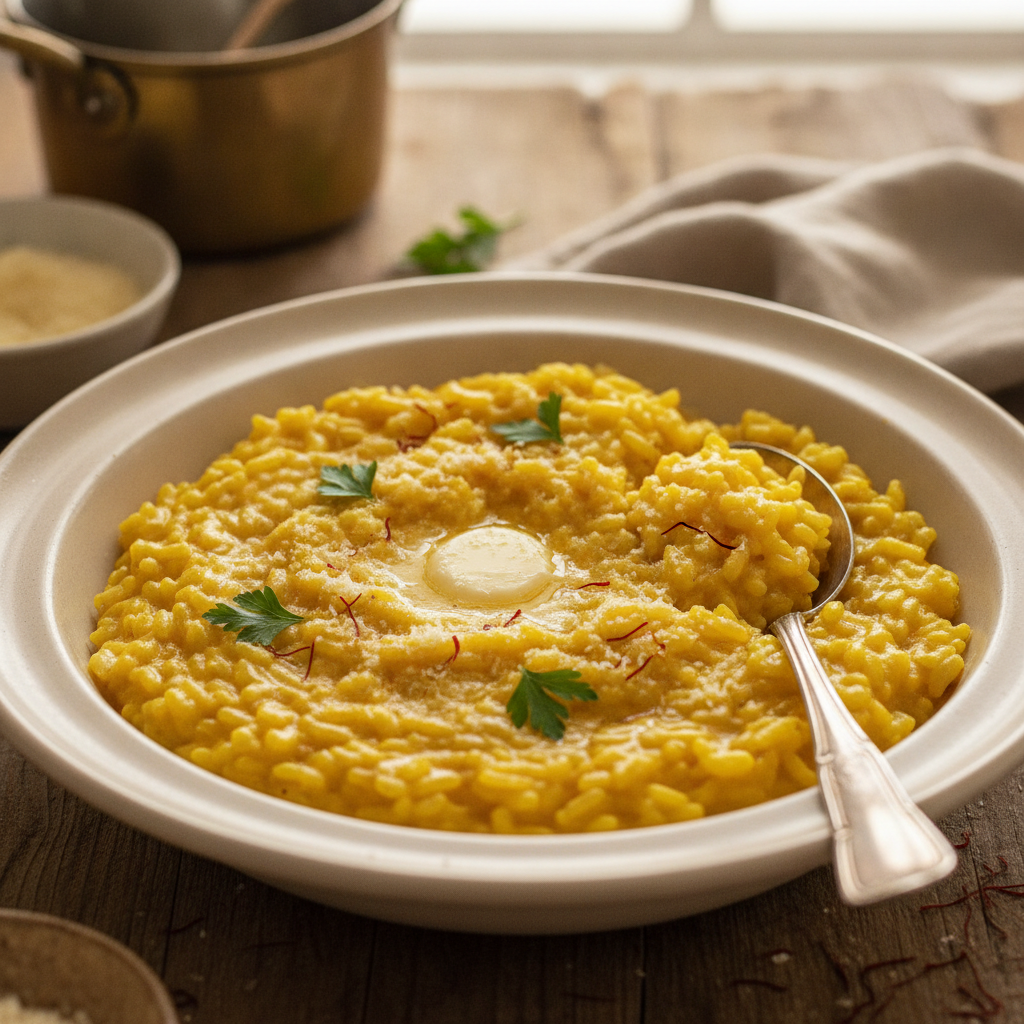
Risotto alla Milanese is a culinary treasure from Lombardy, Italy. Unlike other risottos that rely on herbs or vegetables for flavor, this masterpiece highlights the delicate, earthy aroma of saffron. Cooked slowly with arborio rice, dry white wine, and a rich broth, the star of this dish is the mantecatura—the final step of vigorously beating in cold butter and finely grated Parmigiano-Reggiano to achieve a naturally creamy, pourable consistency (known in Italy as all’onda, or “wavy”).
Ingredients
For a beautifully balanced, home-style version inspired by classic Italian methods, you will need:
- 1 ½ cups (300g) Arborio or Carnaroli rice
- 1 teaspoon high-quality saffron threads
- 5 to 6 cups low-sodium beef or chicken stock (kept hot on the stove)
- 1 small yellow onion, very finely minced
- ½ cup (120ml) dry white wine (such as Pinot Grigio or Sauvignon Blanc)
- 4 tablespoons unsalted butter (divided; 2 tbsp for cooking, 2 tbsp cold for finishing)
- ½ cup freshly grated Parmigiano-Reggiano cheese
- Salt and freshly ground black pepper to taste
Step-by-Step Instructions
1. Bloom the Saffron
To extract the maximum color and flavor from your saffron, place the saffron threads in a small bowl with about ¼ cup of warm stock. Let it steep for at least 10 to 15 minutes while you prepare the rest of the ingredients.
2. Heat the Broth
Pour your remaining stock into a saucepan and bring it to a gentle simmer over low heat. It is crucial to keep the broth hot throughout the cooking process so it doesn’t lower the temperature of the rice as you add it.
3. Sauté the Aromatics
In a large, heavy-bottomed saucepan or skillet, melt 2 tablespoons of the butter over medium heat. Add the finely minced onion and cook slowly until it is soft, translucent, and fragrant (about 5 minutes). Be careful not to let the onion brown, as we want to preserve the golden color of the final dish.
4. Toast the Rice
Add the Arborio rice to the pan with the onions. Stir continuously for 2 to 3 minutes to toast the grains. You will know it is ready when the edges of the rice grains become translucent, but the centers remain opaque. Toasting seals the surface of the rice, helping it release starches gradually for a creamier texture without turning mushy.
5. Deglaze with Wine
Pour in the dry white wine, stirring constantly. Let the wine simmer until it is almost entirely absorbed by the rice and the alcohol aroma has cooked off.
6. Add Stock Gradually
Reduce the heat to medium-low. Add a ladleful of the hot broth (about ½ cup) to the rice. Stir gently but frequently. Allow the liquid to be almost fully absorbed before adding the next ladle of broth. Repeat this process, stirring to encourage the rice to release its natural starches.
7. Incorporate the Saffron
When the rice is about halfway cooked (roughly 10 to 12 minutes into the broth additions), stir in the steeped saffron liquid along with the threads. The rice will instantly turn a brilliant, deep golden color.
8. Achieve the Perfect Al Dente
Continue adding broth ladle by ladle. After about 18 to 20 minutes total, taste the rice. The grains should be tender but still have a slight, firm bite in the center (al dente). You may not need all of the broth.
9. The Mantecatura (The Finish)
Remove the pan from the heat. This is the secret to true Italian creamy risotto. Add the remaining 2 tablespoons of cold, cubed butter and the freshly grated Parmigiano-Reggiano. Stir vigorously for about a minute. The cold fat will emulsify with the hot starch, creating an incredibly rich, velvety sauce. Cover the pan and let it rest for 2 minutes before serving.
Tips for Best Results
- Never use cold stock: Adding cold liquid to the pan shocks the rice, interrupts the cooking process, and prevents the starch from releasing properly.
- Don’t over-stir: While you need to stir to keep the rice from sticking and to help create the creamy sauce, stirring constantly and aggressively can make the rice gummy. Stir gently and periodically.
- Choose the right pot: A wide, heavy-bottomed pan ensures even heat distribution and allows the rice to cook at a uniform rate.
Serving Suggestions
Serve your Risotto alla Milanese immediately on warm plates. It is traditionally served alongside Ossobuco (braised veal shanks), but it also pairs beautifully with roasted chicken, seared scallops, or a simple arugula salad dressed with lemon and olive oil.
Storage and Reheating
Risotto is best enjoyed immediately. However, leftovers can be stored in an airtight container in the refrigerator for up to 3 days. To reheat, place the risotto in a saucepan with a splash of water or broth over low heat, stirring gently until warm and creamy again. Alternatively, use leftover cold risotto to make delicious Italian Arancini (fried rice balls)!
Frequently Asked Questions
Can I make this recipe vegetarian?
Absolutely! Simply swap the beef or chicken stock for a high-quality, light vegetable broth. Ensure the broth is well-seasoned to maintain a rich flavor profile.
What is the difference between Arborio and Carnaroli rice?
While Arborio is the most widely available risotto rice, Carnaroli is often preferred by professional chefs. Carnaroli has a slightly longer grain and a higher starch content, making it more forgiving to cook and yielding an exceptionally creamy texture.
Do I need to wash the rice before cooking?
No, do not rinse the rice! Rinsing washes away the surface starches that are essential for creating the signature creamy sauce of a great risotto.
Source Media