Classic Italian Pickled Eggplant in Oil (Melanzane Sott’Olio)
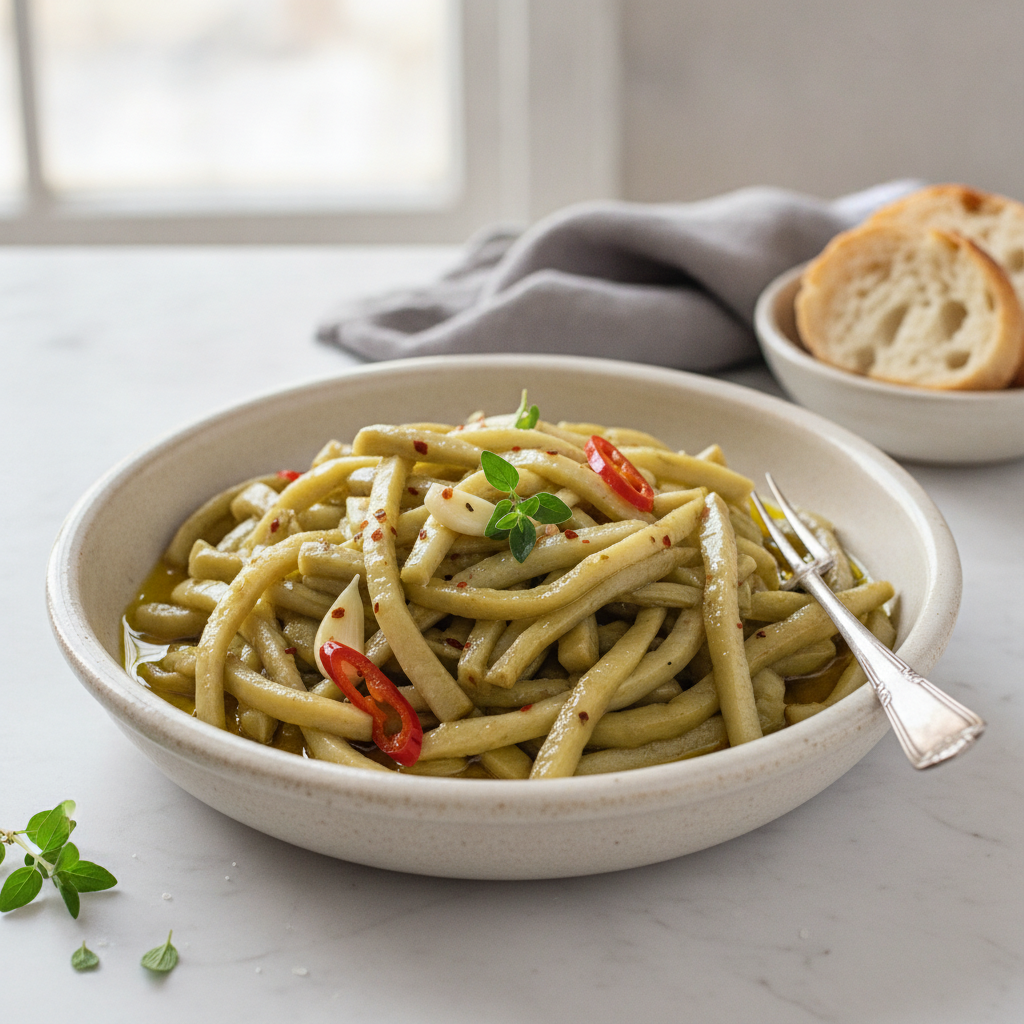
If you have ever stepped into a traditional Italian cellar or pantry, you have likely seen jars of beautiful, pale-green eggplant strips submerged in rich olive oil. Known as Melanzane Sott’Olio, this classic southern Italian specialty is the ultimate way to preserve summer eggplant.
Making pickled eggplant at home is a labor of love. While the process spans over a day or two, the steps themselves are incredibly simple and require absolutely no advanced culinary skills. By salting, pressing, boiling in vinegar, and pressing once more, you transform a spongey vegetable into a meaty, tangy, and savory delicacy. It is a patient process, but the moment you pile these tender, herb-infused ribbons onto a slice of crusty bread, you will know the effort was entirely worth it.
Recipe Overview
This recipe is a classic, rustic Italian method for preserving eggplant in olive oil. It relies on a two-step pressing technique to extract bitter juices and water, ensuring the eggplant stays firm and meaty rather than mushy. Infused with garlic, dried oregano, and chili flakes, it makes a magnificent addition to any antipasto platter.
Ingredients
- Eggplants: 3 pounds (about 3 large globe eggplants or several Italian eggplants), peeled and cut into thin matchsticks
- Coarse Salt: Approximately 1/4 cup (for purging moisture)
- Vinegar Solution: 2 cups white wine vinegar or red wine vinegar, mixed with 2 cups water
- Garlic: 4 to 5 cloves, very thinly sliced
- Herbs & Spices: 2 tablespoons dried oregano, and 1 teaspoon crushed red pepper flakes (optional, for a subtle kick)
- Oil: High-quality extra virgin olive oil, as needed to completely submerge the eggplant (approximately 2 to 3 cups)
Step-by-Step Instructions
Step 1: Prep and First Salting (The First Press)
Peel the eggplants completely. Cut them lengthwise into slices about 1/3-inch thick, then cut those slices into thin strips or matchsticks.
Place a colander over a large bowl. Layer the eggplant strips in the colander, sprinkling coarse salt generously over each layer. Once all the eggplant is salted, place a flat plate directly on top of the eggplant strips. Weigh the plate down with heavy objects, such as clean canned goods or a heavy cast-iron skillet. Let this sit for 12 to 24 hours. The salt and weight will draw out the bitter juices, reducing the volume of the eggplant significantly.
Step 2: The Vinegar Boil
Rinse the eggplant strips thoroughly under cold running water to remove the excess salt. Squeeze them out with your hands in small batches to get rid of the rinsing water.
In a large pot, bring the vinegar and water solution to a rolling boil. Add the eggplant strips in batches. Boil for exactly 2 to 3 minutes. You want them to soften slightly and absorb the acidity, but not turn into mush. Remove them with a slotted spoon and spread them out on clean kitchen towels to cool.
Step 3: Squeezing Dry (The Second Press)
Once cool enough to handle, you must remove as much liquid as possible. This is the secret to a long shelf-life and a perfect, meaty texture. Wrap batches of the boiled eggplant in a clean lint-free kitchen towel or cheesecloth and wring them out forcefully. Alternatively, you can use a clean potato ricer to press out the moisture. The eggplant should feel quite dry to the touch when you are finished.
Step 4: Seasoning and Jarring
In a large mixing bowl, gently toss the dry eggplant strips with the sliced garlic, dried oregano, and red pepper flakes until evenly distributed.
Pack the seasoned eggplant firmly into sterilized glass jars, leaving about an inch of headspace at the top. Slowly pour extra virgin olive oil over the eggplant. Use a clean butter knife or chopstick to slide down the inside of the jar, releasing any trapped air bubbles. Add more oil as needed to ensure the eggplant is completely submerged by at least half an inch of oil.
Step 5: The Cure
Seal the jars tightly. Let them sit in a cool, dark pantry or the refrigerator for at least one week before opening. This allows the flavors of the garlic, herbs, and olive oil to deeply penetrate the eggplant.
Tips for Best Results
- Moisture is the Enemy: Take your time during the second press. Any excess water left in the eggplant can dilute the preservation qualities of the oil and vinegar, and alter the texture.
- Use Dried Herbs: Traditional recipes favor dried oregano or dried mint. Fresh herbs contain moisture and can introduce spoilage risks when preserved in oil over long periods.
- Always Keep Submerged: Whenever you spoon some pickled eggplant out of the jar, ensure the remaining pieces are pushed back down beneath the oil level. If exposed to air, they can mold.
Serving Suggestions
These pickled eggplants are incredibly versatile. Serve them at room temperature as part of a classic Italian antipasto board alongside prosciutto, salami, sharp provolone, and marinated olives. They are also spectacular piled high on warm toasted crostini, tucked into a crusty panino with fresh mozzarella, or tossed into a cold pasta salad.
Storage
Store your jars in a cool, dark place. For long-term home-cooking safety, storing the jars in the refrigerator is highly recommended. The olive oil will solidify and turn cloudy in the fridge; simply remove the jar from the refrigerator about 20 to 30 minutes before serving, and the oil will liquefy and become beautifully clear again.
Frequently Asked Questions
Can I use fresh garlic instead of sliced?
Thinly sliced fresh garlic is traditional and infuses the oil beautifully. Make sure the garlic slices are fully submerged under the oil alongside the eggplant.
Why is my eggplant mushy?
Mushy eggplant is usually the result of boiling it for too long in the vinegar solution. Be sure to keep the boiling time strictly between 2 and 3 minutes. It should still have a bit of “bite” before it goes into the jars.
Can I use the leftover oil?
Absolutely! The leftover olive oil becomes deeply infused with garlic, oregano, and eggplant flavors. Use it to dress salads, drizzle over roasted vegetables, or as a dipping oil for warm crusty bread.
Source Media
Source: Nonna Pia’s Pickled Eggplant!